Showing posts with label Research. Show all posts

Wednesday, 27 February 2013

Film Reviews - Magazine Format


Film reviews critique releases and features suggesting an opinion in which may sway a reader or audience member to believe the review of the film with certain expectations. Famous magazines especially for movie reviews such as Empire Magazine for film features such as breaking film news and releases and reviews for films or DVD releases. This type of film criticism evaluates a film either individually or collectively, formerly known as "Film Criticism", it is mostly seen in Magazines or newspapers. Journalistic criticism is defined through the evaluation of newly released films by film critics working for large broadcast media. Film reviews will suggest the overall plot and if done so negatively, a financial loss can be caused for a film. It has come however to many people's attention whether box office reviews actually do have an impact on the reception or DVD sales of a film.

Film reviews can also be found on websites on the internet such as Rotten Tomatoes, which make reviews and ratings more convenient by compiling them together to create an overall score for a film.  Many websites, simply such as the IMDB allow users to submit comments and reviews to allow a broad consensus review, and allow the spread of a films word.  Independent films for example have a higher opportunity to be recognized that way, therefore relying on social spread.

EMPIRE MAGAZINE

British Film magazine is the biggest selling in Britain and is also published in America, Australia, Turkey, Russia and Portugal, reviewing both mainstream art house features with a more populist approach.  Well known reviews include Jurassic Park, Jaws and many other so called masterpieces.  After a poll of 10k readers; Steven Spielberg was awarded the honor of being Greatest director.


SIGHT AND SOUND

Published by the British Film Institute, Sight and Sound focuses on art house, limited releases and can often be accused of snobbery in it's approaches.  Famous reviews include Roshomon and the God Father.

TOTAL FILM 

A monthly magazine posting 13 times a year, Total Film is UK based and offers cinema, DVD and Blu-ray news, reviews and features. Total Film is available both in print and interactive iPad editions.  Each issue always includes the Total Film Interview, which is a six-page in-depth chat with an actor or director, along with a critique of their body of work.

ZOO

A film review from zoo however would differ using large screenshots of photos with less review writing found on the website; the layout is also in paragraphs aside to collumns.

CONVENTIONS OF FILM REVIEWS

HEADLINE: Gives the reader the insight into the film's title and a suggestion as to what it us about; a first impression and introduction to the feature.  A release date certification may also be found as these are crucial information for a viewer as they may wish to view the film.

REVIEW:  A film review can range from a sentence to a two page essay; this is all depends on the type of magazine and film being reviewed; genre and type included.

SCREENSHOTS:  Screenshots of film footage will be a main feature of a magazine review to suggest the film and it's content, allowing the reader to enter further the world of the film and what it is about.

My Surrealist feature is an independent, art house feature which will need to be reviewed in depth in styles of  magazine's such as the Sight and Sound magazine; it is not a large, Hollywood Blockbuster requiring too much large promotion.  Therefore the review must be honest and capture the short film in it's best light, simple in it's style and font use, colours etc.    

Monday, 25 February 2013

The History of Film Posters

Used to advertise a film, a movie poster can be printed in a variety of sizes for domestic or international uses.  Prior to the 1990s, it was more common for illustrations to be used on a film poster whereas today it is more common to see main actors photographed.  The National Screen Service in the US was where film posters were initially printed then distributed between 1940 and 1984, they would then be recycled and eventually thrown away after they are no longer needed.  Film posters also made great memorabilia for collectors; those from the NSS that were returned would sometimes be stored for collective purposes and have a high value.  In the early 20th century; printing was not easy and expensive therefore the price of promoting was high, this drastically changed over the years.

1920s

  • Traditional hand drawn stills, depicting scenes from the movie 
1930s
  • Bolder, typographic designs and illustrations focus more towards main characters of the films
1940s

  • Character illustrations are most prominent, with typography more defined
1950s
  • Poster designs take a more conceptual approach with subtle film clues and content, with more focus on typography than illustrations
1960s
  • Film poster are more focused on importance of layout such as the central cast member 
1970s
  • Photography begins to play a role for the first time in movie posters; taking up the majority of the space in the canvas 
1980s
  • The evolution in film poster is clearly seen; reflecting poster conventions which we usually see today - such as the big photographic backgrounds with more balanced types and imagery
1990s
  • Posters become more formulaic; with the large photographic backgrounds, slogans/ taglines and headlining cast members
2000s
  • The revolution of movie posters is most clear, following the layout see from the 1980s onwards of large scenic photographs and minimalistic approaches


Wednesday, 6 February 2013

Film Poster in Popular Culture

Film posters as an item for product exhibition are a way for audience's to become engages with film releases which may perhaps be by their favourite directors, an anticipated release for example.  Global synergy of mass media conglomerates enables studios to distribute their items on a scale as never before, through merchandising of products related to the film - such as simply my owning of 'Frankenweenie's' Victor's plush toy WITH bendable limbs. The film poster simply reflects the product it has released, aiming to intrigue an audience without suggesting too much of the plot.  It allows a sense of community as these items allow the building and expansion of fan bases amongst audiences, simply such as the placing of large film posters on your bedroom wall, to purchasing a T-shirt featuring your favourite character.     

Going back to Tim Burton's spectacular stop motion, black and white animation; 'Frankenweenie' was very effectively distributed with it's merchandising through Disney, created a vast range of products for its audience.  This style of poster is a 'character poster', usually one of many released featuring each an individual character of the film, containing a basic image or design without revealing too much information such as the plot, theme, and characters. I find the poster artistic, this one in particular shows Sparky, the main, animal character who is soon brought back to life by Victor - the black and white colour palette enhance the gloomy, dark nature of the film and gives audience an expectation.  The bright green choice of colour for titling however completely contradicts this dull nature of colours and composition, adding excitement and life to the poster.  This contrasting use of titling is almost striking and effective, it could imply that the film is perhaps very suitable for a children audience and is not so dark - which is soon discovered after watching the film.


Not only is the poster format used simply as a poster which can be sold and stuck on walls; this format is also used in popular, contemporary forms such as clothing items.  Merchandise such as T-shirts, memorabilia, iPhone/ Mobile cases, stationary, toys - the list is endless - media products can be easily exploited to create products that are easily manipulated in a variety of forms.  One poster design can lead to the creation and expansion of a variety of products.  It's not just a poster.


A film poster has a large influence over the release of the film - a simple 'teaser poster' can suggest hints on what is to be expected from the movie's release.  It is not aimed to completely burn a plot - but to engage an audience.  The poster is seen, and adapts according to the genre, style and overall film.  It sets expectations to an audience who will judge straight away according to what a teaser poster they will have seen implies, film trailer in itself put aside - a poster has a large impact on suggesting casting, plot and overall genre.  A thriller genre poster for example will vary in colours - experimenting with aspects of mise-en-scene such as light; conventions would imply dark lighting, and minimal clues to not give away the plot.  Large influences of posters such as album art by bands does not simply be used for album art - but can be used as posters by fans who favour a certain band - such as Two Door Cinema Club's 'Tourist History' album art which is often being used to sell as posters.  

Film posters are also used as an advertisement of the cast featured in the film; this was usually highlighted when film first began.  A lover of a certain actor or actress may see their name on an upcoming Hollywood blockbuster; and will instantly view the film regardless of genre preference or even it's reception.  This is taken to advantage to the way that film as a product is distributed especially through the forms of posters where large font and titling can highlight a loved actress's appearance.  

Ancillary Task - Film Poster Conventions

A film poster is used to market the product and is a suggestion to the films genre in order to attract members of the audience during it's distribution.  It should be eye catching and captivating, with an intriguing focal image that could perhaps show one of the characters, which may be played by famous actors or actresses.  A large readable title is usually present, with a tagline present - and a reslease date - a 'teaser poster'.  The way that a film poster is constructed will usually suggest the genre of a film; such as a mainstream, chick-flick rom com would present the 'blonde bombshell' all dressed in pink as a focal point.  An Indepenent film poster would differ as it may be more intriguing with a variety of medias used to create it; such as a painting, sketch or a minialistic approach to prop use.

(500) DAYS OF SUMMER - 2009
Comedy drama feature with Zooey Deschanel and Joseph Gordon-Levitt is an Independent production distributed by Fox Searchlight Pictures and was premiered at the 2009 Sundance Festival.  It's teaser poster suggests conventions of how a poster can be used to distribute a product through use of images and titling.
1.  A title placed at the centre of the image being a main feature - 500 is in large bold print being a focal point, suggesting it is of importance to the storyline.
2.  The blue background of the poster is of calm nature and creates a simple effect, being a dominant colour of the poster.
3.  A usual familiar film poster convention is a film critic response - a positive response with a high star rating that usually persuades an audience to see it, and depending who the quote is by would imply the genre of the film.
4.  Short, dramatic tagline is used to sum up the storyline - this way almost quirky as a suggestion to the comedy aspects of the film.
5.  The certificate of the film is required on the promotional poster of the film by the Motion Picture Association. This film will contain mild language and references. Certified at 12A.
6. The names of the two main actors are placed below their image at the bottom half of the poster. Mainly due to the fact that the cast is well known but also to promote the actors.
7.  The credits of the film are often featured at the bottom of the poster is faded out font colour and in a smaller font; suggeting distributors, studio, cast, director etc.
8.  The main character of the film is then the main image on the poster that focuses the audience in to learning more about his soft, comedic, body language. Looking down on his t-shirt that contains “good memory” images of his relationship, displayed on the centre of the poster.  The main image takes of at least two thirds of the poster, placing emphasis once more on the main character.
 
ANCILLARY TASK

In order for me to create an effective film poster for my short feature I should consider the style of film and it's conventions to portray those elements effectively.  For example, being an independent, surrealist feature, I will immediately not aim to conform to stereotypical genres of movie posters, straight away for example I think props will be useful.  With the clocks used as an indication and importance in the film, the concept of time drives the piece and overrides the main character.  The plot is emphasised through concept which defines the character development, not through the character themselves.  I feel that keeping the poster for 'The Persistence of Memory' simple, will have a more effective outcome and is more intriguing to the audience.  For example; a white, blinding background with the images of the clocks in the centre are a suggestion to the audience that the concept of time is extremely relevant - these props are crucial to the communication of my film concept.

Wednesday, 12 December 2012

The Contemporary Period - Independant Poster

The Independent films created in the Contemporary Cinematic period show certain aspects and conventions that I will choose to make a poster; this is an original piece that does not exist.  Posters are a product used for film promotion yet also have high artistic value beside it's commercial purpose.  These a few examples of Independent releases and their posters used to promote the products.  Independent films/ their posters contradict stereotypical, mainstream plots and conventions - such as a Blockbuster movie poster would typically suggest the plot straight away through the cast and prop use on a film poster - promoting the cast.  Limited independent film availability makes them unique and exquisite and are not traditional to the Hollywood system.  poster art plays an particularly significant role in an independent film’s marketing strategy.  These posters are imaginative and thoughtful while not forgetting the fundamentals such as colour and typography. The result is more often than not an eye catching work of art that sparks your interest and curiosity  
 
PEACH PLUM PEAR (2011)
 
The film features Pretty Little Liars actor Tyler Blackburn, playing Jesse who attempts a trip in order to connect with his father.  He learns lessons about relationships and himself.  The film poster uses a digital photograph featuring 3 main characters, placed in a confrontational manner as they look the camera in it's eye.  It seems to leave little to the viewer allowing them to further question the characters situation to suggest a mystery; the audience are therefore intrigued. 


MACHINIST (2004)
 
Featuring Christian Bale, Machinist is a Thriller where an industrial worker who hasn't slept in a year begins to question his insanity.  The poster is simple and mysterious, upon a gritty green background shows a post-it note where hangman is being played - 'ER' suggest 'KILLER' is going to be spelt out.  It is not stereotypical, mainstream poster where the main character is expected to be the feature of the poster where attention is more drawn to him - therefore fitting to Independent conventions and genres.

JUNEBUG (2005)

This poster is indeed very unique as it is not created using digital images but drawn artistically with the use of paint and illustration to suggest the characters.  It reflects the plot perfectly, about an 'outsider' artist owning an art gallery who seeks to threaten her middle-class inlaws -  Madeline's presence exposes the fragile family dynamics as hidden resentments and anxieties surface.  It seems to be simple, perhaps childlike in it's drawings and slightly distorted and we cannot be entirely sure what the meaning is - but art.  The interpretation is altered between every viewer.


THE MOTEL (2005)

This poster is also artistically presented; in form of a cartoon like comic strip.  A young 13 boy living and working at a motel on a suburban bi-way befriends a Korean man who checks in and teacher the fatherless boy the rites of manhood as he blindly careens into puberty.  The carton strip seems to feature the young boy in most windows, it seems to suggest confrontations in his family and the role he has as he works at the motel from a young age.

An independent poster shows a pattern of conventions as they allow a viewer to question what is being portrayed; and symbolically would show the plot of a film.  The main character is rarely places at the front with large bold font to display the cast - yet could focus on an elaborate object that has meaning and representation to the product - unlike mainstream blockbuster posters.  Many art forms are explored such as the use of illustration or sketches to enhance the attention drawn to an independent movie poster - it wouldn't necessarily aim to appeal to a large mainstream audience. 

Monday, 19 November 2012

Prop and Costume Planning

BENDY RECORDS?
 
Creating melted clocks like in Dali's painting will be an artistic challenge; but an idea suggested by a friend was the use of vinyls which become very versatile once heated.  The central mark with the paper can have arrows attached to it in order to replicate a clock form.
 
  PLASTER CLOCKS
 
Plaster can be used to manipulate and again create a clock like figure, slightly distorted around the edges; I will have to also create it's duplicate for the before and after state.  I will paint a variety of shapes and sizes.
 
REAL CLOCKS
 
My initial idea which I think is my most preferable suggests the use of real clocks gathered from a variety of places such as shops, borrowed, charity shops etc.  These will come in the form of many shapes and sizes such as wall clocks, alarm clocks, and grandfather clocks.  This variety enhances the characters obsession with the element of time. 
 
CRYSTAL WINE GLASSES
 
Crystal wine glasses will be used in the following scene commencing in the dream state; the dining room table is another symbolic aspect of my feature where the actors are seen 'drinking' from questionable empty glasses.
 
CRYSTAL BOWLS
 
This will be the centrepiece of the dining table, filled with various again questionable elements.
 
CANDLES/ GOTHIC CANDLE HOLDERS
 
 Gothic candle holders placed in the centre will enhance an old fashioned aspect, they are usually used as a centrepiece, instead of being alight they will be dull and slightly dark where they have been blown out, smoke will arise.

 CUTLERY/ PLATES

Each character will have an empty china plate and cutlery placed in front of them.

A memory is shown through various elements and props which will decorate the dining room; such as through aspects of his childhood. 

COSTUME

Unknown Male is seen first in bed, asleep.  He wears pyjamas, striped is most preferred.  A large watch is seen on his wrist.  The scene following is in the dining room; where he is transported from his peaceful sleep into the dream state - he is still wearing his pyjamas.  Unknown Female is an element of sophistication; dressed in a large knee-length skirt and brogue like shoes, with a heel.  A blouse can be seen beneath her cardigan, further accessories suggest her seductive, glamorous role.

MAKEUP

Unknown Female is subtle in terms of eyemakeup, black liner highlights the top eyelid.  Rouge lipstick is elegant as it accentuates the lips. 

Thursday, 15 November 2012

Production of Short Films

Exploring short films and the production process, different stages must be considered such as the use of sound or camera angles - and the portrayal of narrative styles, also the editing process.  These aspects guarantee the overall media product in how it depicts the genre of a film, and a plot/ convention.

SOUND

Film isn't just a visual experience; the use of sound creates an atmosphere which cannot be underestimated - sound consists of three main aspects. These are the human voice, sound effects and music - mixed and balanced, these three tracks include dialogue, synchronous and asynchronous sound, and music.  The use of dialogue as referred to by 'human voice' authenticates the speaker; telling the story and expressing feelings of the characters, this way little difference between character and actor is shown.  Contrastingly, little use of dialogue can also be effective - such as by fully using sound effects/ music to create tension etc.  The contrast of silence and sound is effective in genres such as Thriller/ horror films.  

The Lake by Garry Lane (1994) is a short film that uses narration, and minimal dialogue - sound are used to exaggerate the situation of the characters via screams, splashes etc.


SOUND EFFECTS

There are two types of sound effects used in film; synchronous sound refers to those sounds that match what is being shown; such as a character playing piano in a shot - we would hear the sound of the piano.  Synchronous sounds are effective in creating a realistic atmosphere, and can engage an audience such as in a moment of suspense - such as if they were to be heard creaking the door open.  Asynchronous sound effects do not match the image being viewed, and can therefore create a sense of emotional nuance - for example, the background sirens add to the suspense as we see our beloved hero fall to the floor in a scene.  This type of sound acknowledges surrounding scenery and atmosphere, again heightening realist aspects.  

This video shows effective use of foley sound used to create synchronous and asynchronous sound.

Music can also be used in films to add emotion or rhythm, it provides an emotional attitude and doesn't necessarily have to be notices in order to create effect.  Distant use of music implies a change in mood; such as dissonant music foreshadowing an upcoming tragedy. Background music can also help the viewer to link scenes. For example, a particular musical theme associated with an individual character/ situation may be repeated at various points in a film in order to remind the audience of salient motifs or ideas.

Use of Medium Shot in 'Get off my land', dialogue scene
CAMERA ANGLES/ SHOTS

Camera angles and movements define the sequence and creation of images in film; in order to gain interest in a shorter length feature, a variety of shots is vital.  Camera angles and shots refer to the framing/ length of shot, angle and movement tracking - the transition between different shots is referred to as a cut.  

SHOT LENGTHS
  • Extreme long shot (taken from a 1/4 of a mile away, scene setting, establishing shot, e.g. 'Get off my Land')
  • Long shot (image is almost 'life size' from a distance)
  • Medium shot (figure shot from knees/ waist upwards - normally used for dialogue scenes)
  • Close-up (shows very little background, specific detail of mise-en-scene, magnifies object/ importance)
  • Extreme close-up (magnifies beyond the human eyes ability, an artificial shot for dramatic effect)
ANGLES
  • The Birds Eye View (directly shot from overhead, object is smaller with less significance)
  • High angle (elevated above action, shows superiority)
  • Eye level (neutral shot, human level)
  • Low Angle (increase height - speeded motion, add disorientation to the viewer)
  • Oblique/ Canted Angle (titled, suggests imbalance, instability e.g. in horror movies)
MOVEMENT
  • Pans (scans scene horizontally)
  • Tilts (scans scene vertically)
  • Dolly shots (track scene)
  • Hand-held shots
  • Crane shots 
  • Zoom lenses (increase magnification)
  • Arial shot (powerful, even use helicopter)
EDITING

The post production means of film-making is the editing process; the use of technology allows the variations of editing through expansion of software's, programmes etc.  Well known editing forms and styles such as Classic Hollywood editing is enhanced through a large use of match cuts, of takes less than 7 seconds.  Montage editing is rarely used within Hollywood creations and is more likely to be seen in independent shorts.  This style of editing refers to many images juxtaposed together rapidly; and doesn't necessarily make sense.   
DROOM - A Surrealist short on the BBC film network is an example of a montage style product.


TWO AND TWO - This film is a symbol of dictatorship and tyranny and it's absurdness; is clearly edited in term of time-scale and continuity editing.  

Narration

Excuse my weirdness. A video about Narration types, and it's use in short films.


Sunday, 11 November 2012

Consumption of Short films

The consumption of short film has expanded as new methods of technology have grown; blogs, festivals, websites and DVD/ Blu Ray releases enhance our ability as the general public and audience to access shorts that have been created from independent film makers, to Pixar shorts before their features. 

VIRGIN MEDIA SHORTS

Virgin Media Shorts allows submission of created shorts, where 12 films are elected by a panel of judges then screened in UK cinemas for a year - across the Picturehouse network and many independent cinemas nationally.  The films that are chosen mean that filmmakers are given an opportunity to be recognized on a large scale - with the grand winner winning £30,000 funding for their next project.  Makers will turn heads of many industry specialists; this organisation enables the consumption of short film to be easy, with categories and genres to allow easy browsing of thousands of short films.  

BBC FILM NETWORK

The BBC film network allows the submission of short films that can be viewed on the website, many films have been created by independent film makers - the website is well known and therefore allows easier consumption of short films as people have the ability to browse certain genres.  Films such as 'Get off my land' which we replicated and 'My Beast friend' can be found on there.

PIXAR SHORTS

Pixar have released a Short Films collection volume (1); a DVD and Blu Ray title which shows all works from 1986-2006.  The shorts included are:
  • The Adventures of André and Wally B. (December 18, 1984)
  • Luxo Jr. (August 17, 1986)
  • Red's Dream (November 30, 1987)
  • Tin Toy (December 30, 1988)
  • Knick Knack (re-rendered version as seen on Finding Nemo) (January 3, 1989)
  • Geri's Game (April 2, 1997)
  • For the Birds (May 1, 2000)
  • Mike's New Car (November 4, 2002)
  • Boundin' (May 7, 2003)
  • Jack-Jack Attack (March 15, 2005)
  • One Man Band (May 5, 2005)
  • Mater and the Ghostlight (October 31, 2006)
  • Lifted (December 21, 2006)
Short films like Pixar are easily distributed as they are shown before their main features in the cinema - releases on DVD and Blu Ray have allowed an expansion in the consumption of short films, as they can be purchased and watched by many audiences, educating audiences into differing short films and their genres.

SHORT FILM FESTIVALS

Short films can be submitted by filmmakers into many national and even global short film festivals, which allow the distribution of one's product. The London Short film festival is highly recognized as the premiere UK showcase for cutting-edge UK independent film.  Screenings and events allow audiences to attend, it developed in 2003, with 75% of events sold to capacity, and over 5,000 tickets sold.

Monday, 5 November 2012

FRANKENWEENIE

After long anticipation of Tim Burton's new feature; Frankenweenie I must admit the dark, black and white, stop-motion animation met my high expectations - after long periods of counting down and viewing it the day of it's release. Being aware of my sensitive nature, especially when watching films - my ability to sympathize with characters led to my prediction of tears in the cinema after Victor's dog dies.  The plot emphasizes Victor's talent and intelligence and he conducts a life changing science experiment where he is able to shock his beloved dog, Sparky back to life - creating his FRANKEN-weenie! What we do not is expect is that this action leads to terrible consequences as his class-mates drive for competition due to the upcoming science fair.  The quirky, comedy-horror is a remake of Burton's 1984 short film, also challenging Mary Shelley's Frankenstein.  Released by Walt Disney Pictures, on 5th October 2012 - the film has met many positive reviews and is also known as the first black and white stop-motion animated feature to be released in IMAX 3D.  

So my score out of ten? Probably a 100.  I absolutely loved the film, it is extremely artistic and characters develop comically and are depicted darkly, with animation artists from the also fantastic Corpse Bride being included to work on the feature.  Amazingly, Sparky's little grave stone has also been added to the Haunted Mansion Holiday event of Disneyland where characters from The Nightmare before Christmas are also placed.  Also being an enthusiastic fan, I was keen enough to purchase the soundtrack for the fiilm - which may I point out was one of the main reasons I was that attracted to the film - with great tracks from Passion Pit, Grouplove etc. - currently my favorite album.  I am now awaiting the release of Frankenweenie on DVD in January 2013!

Sunday, 28 October 2012

Audience Research

I asked family members on what they believed a short film is to be, and what conventions/ genres are most common in a short film.  The feedback suggests that short film as a product is reasonably new, and that they aware of the fact that a short film is vulnerable in nature and can easily suit a variety of genres and conventions - aiming to engage audience's for a short period of time.


Wednesday, 17 October 2012

Paranoiac Critical Method and Freudian Influence

What I find extremely stimulating is a Surrealist Artists ability to reach within their subconscious in order to produce art forms which we an audience or viewer are able to also interpret subconsciously.  A surrealist method developed by Salvador Dali in the early 1930s which he used in his production of his artworks, especially his paintings that involved optical illusions. He described it as being a "spontaneous method of irrational knowledge based on the critical and systematic objectivity of the associations and interpretations of delirious phenomena."  This method is used by Dali and then adapted by other Surrealists which allowed him to access a part of the mind which is not usually obvious, resulting in bizarre use of imagery and ideas.  The influence of the Paranoiac Critical method can therefore be used to trigger subconscious thoughts which can effectively be used as symbolism in a variety of art forms including film.


Dali was also very influenced by Sigmund Freud's theories of the unconscious mind and it's powers, which we can not access.  The unconscious mind is thought to contain repressed memories and thought processes which are stored from events from childhood, later reflected in actions such as speech or simply emotions.  Actions such as the well known 'Freudian Slip' - a mistaken word substituted in a sentence accidentally... or is it accidentally?  Freud emphasised the importance of dreams to being the 'Royal road to the unconscious'  which stresses the importance of dreams to being a portrayal of repressed memories and wishful thinking.  I find the concepts of psychoanalysis extremely important in defining our ability to express ourselves as human beings, scientifically although it is difficult to reach our unconscious, methods of relaxation or simply dreams are a reflection of powers that are beyond us. 

Tuesday, 16 October 2012

Dadaism

Dada was an art movement in Europe developed in the early 20th Century; first beginning in Switzerland then spreading to Berlin shortly after - Dada depicts the the horrors of WWI.  It is a negative reaction which created a vast and international movement, created by a group of artists and poets in Zurich, Dada promotes nonsense and irrationality rejecting reason and logic - this is even depicted in the name itself - Dada simply has no meaning.  It is contemplated that the name came from the frequent use of da, da by Romanian artists Tristan Tzara and Marcel Janco meaning yes.  The movement concentrated it's anti-war politics through a rejection of prevailing standards in art/ art works - the use of visual arts, literature, poetry, art manifestos, art theory, theatre, and graphic design mirrored these views. 
 
A prelude to postmodernism and an influence to pop-art; Dadaists tended to believe that reasoning and logic were the cause of war, bourgeois capitalist society were to blame.  Therefore they expressed this rejection through irrationality and chaos; perhaps Dada intended to offend any sensibilities appealed by art.  With Dadaists rejecting traditional culture and aesthetics, they hoped to destroy this.  Dada artists described the movement as "a phenomenon bursting forth in the midst of the postwar economic and moral crisis, a saviour, a monster, which would lay waste to everything in its path... a systematic work of destruction and demoralisation... In the end it became nothing but an act of sacrilege."

Surrealism developed out of the Dada activities, it's works feature elements of surprise and unexpected juxtopositions.  Freud's work with free association, dream analysis, and the unconscious was of utmost importance to the Surrealists in developing methods to liberate imagination.

Monday, 15 October 2012

Surrealist Cinema

A modernist approach to film and production; Surrealist cinema is often characterised by juxtapositions and frequent use of shocking imagery, it often rejects dramatic psychology.  Surrealist works are often not characterised by a particular style or form  therefore most surrealist artists explore conjunctions, points of contact between different realms of existence - Surrealism therefore explores a "departure rather than an arrival". Richardson defines surrealism as "a shifting point of magnetism around which the collective activity of the surrealists revolves."  The subconscious mind is a heavy factor that influences Surrealist works, most surrealists promote themselves as revolutionaries and shouldn't be mistaken for being irrational incapable of logical thought.  Surrealism is an ever shifting art form. 
 
SURREALIST FILMS/ FILM-MAKERS
 
Un Chien Andalou - Salvador Dali and Luis Buñuel (1929) 
 
The 16 minute long silent film is in black and white - with no actual conventional plot, disjointed chronology shows the opening 'ONCE UPON A TIME' and a jump to 'EIGHT YEARS LATER'; the characters and events do not seem to have changed.  Freudian free association is used as dream logic is depicted in the short film; with a serious of tenuously related scenes.  It has been implied that this film has inspired many independent artists to create low budget features; the opening scene ranked as 10th out of 'The 25 most shocking movie moments in history'.


The Seashell and the Clergyman - Germaine Dulac (original scenario by Antonin Artaud) (1928)

The experimental French film portrays the erotic hallucinations of a priest who lusts after as general's wife - the ironic techniques of surrealist cinema are suggested to be borrowed from this film.  Lee Jamieson analysises the film:

"The Seashell and the Clergyman penetrates the skin of material reality and plunges the viewer into an unstable landscape where the image cannot be trusted. Remarkably, Artaud not only subverts the physical, surface image, but also its interconnection with other images. The result is a complex, multi-layered film, so semiotically unstable that images dissolve into one another both visually and ‘semantically’, truly investing in film’s ability to act upon the subconscious."


L'age D'or - Luis Buñuel (screenplay by Salvador Dali) (1930)

Another Buñuel surrealist feature - L'age d'Or (translates to the Golden Age) is a comedy about the insanities of modern life and the hypocrisy of sexual mores of bourgeois society - and the value system of the Roman Catholic church.  There are thematically-linked presented scenes where a couple attempt to fulfil sexual desires yet are continuously confronted by values of Church, family etc.    There is a reference to Marquis de Sade's novel 120 Days of Sodom; where surviving organists are prepared to emerge to the light of mainstream society.  This was the second artist collaboration between Buñuel and Dali - Buñuel overcame his ignorant cinematic technique in production by filming most of the screenplay (written by Dali).  The film caused political upheaval by the right-wing League of Patriots, angry viewers were offended by the feature.  Violence is said to have been bred by film critique Robert Short due to the implications of social and psychological repression of the libido in a bourgeois society. 

L'Étoile de mer - Man Ray (1928)

The film; which translates to 'The sea star' is based on Robert Desno's script, featuring a couple acting through various scenes, shot out of focus - such as through diffused or textured glass.  Short scenes such as the female actress adjusting a stocking or a man purchasing a sea star in a are shown - there is no clear plot which depicts the epitome of surrealism.  This is a silent film; yet recent copies have been dubbed using Man Ray's personal records from his collection. 


Entr'acte - Rene Clair (1924)

The french film premiered as an enteracte for a ballet production in Paris - Relâche at the Théâtre des Champs-Élysées.  Influenced by Dadaists who contributed to the project, the film explores techniques such as people running in slow motion or reversed actions and vanishing actors. 

Thursday, 11 October 2012

Salvador Dali

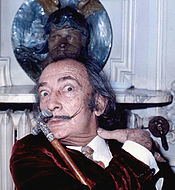
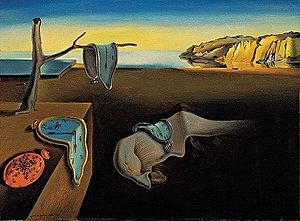
Salvador Dali is my main inspiration for my feature; a surrealist painter and film-maker born in Figueres, Spain in 1904. He was well known for the portrayal of bizarre surreal images in his works, his painterly skills were often attributed to the influence of Renaissance masters. Dali explored many artistic methods such as film, sculpture, and photography, in collaboration with a range of artists in a variety of media. 'The Persistence of Memory' was completed in 1931, and was his best known work. His eccentric manner and attention-grabbing public actions sometimes drew more attention than his artwork, he was highly imaginative.
 
The Dali Atomicus, photo by Philippe Halsman (1948)
ARTWORKS
THE PERSISTENCE OF MEMORY (1931)
The painting by Dali stresses his theories of 'softness' and 'hardness'; the soft watches connote to "the unconscious symbol of the relativity of space and time, which is a Surrealist meditation on the collapse of our notions of a fixed cosmic order" - as described by Dawn Ades. This painting is believed to support Einstein's Special theory of Relativity - but Dali would deny this to perhaps confuse viewers and suggest that the softness is likened to melting Camembert cheese.  A human like figure is clear in the centre, which suggests Dali himself, the use of ants such as on the orange clock represent either death, or in other painting female genitalia.  The figure in the middle of the picture can be read as a "fading" creature, one that often appears in dreams where the dreamer cannot pinpoint the creature's exact form and composition.  The iconography may refer to a dream that Dalí himself had experienced, and the clocks may symbolise the passing of time as one experiences it in sleep or the persistence of time in the eyes of the dreamer.  Dream like imagery is more likely to be portrayed rather than full-waking consciousness.     

DREAM CAUSED BY THE FLIGHT OF A BEE AROUND A POMEGRANATE A SECOND BEFORE AWAKENING (1944)
 
Refferred to a 'hand-painted dream photograph', this surrealist piece by Dali suggests his wife Gala, his wife as the main subject of the scene.  The bayonet is a suggestion to a stinging bee, the tigers distinct stiped pattern also suggest the bee body shape.  This is a reference to Freud's dream theories, where the womens abrupt awakening from her peaceful dream is represented.  The fish may represent the bee's eyes, because of similarity of the fish's scaly skin with the scaly complex eyes of bees.  The elephant is a distorted version of the "Pulcino della Minerva" sculpture by Gian Lorenzo Bernini facing the church of Santa Maria sopra Minerva in Rome.  There is a heart-shaped shadow cast by another, smaller pomegranate which represents Venus.  It has also been a suggestion that this is representation of the Theory of Evolution.  Dalí said his painting was intended "to express for the first time in images Freud's discovery of the typical dream with a lengthy narrative, the consequence of the instantaneousness of a chance event which causes the sleeper to wake up. Thus, as a bar might fall on the neck of a sleeping person, causing them to wake up and for a long dream to end with the guillotine blade falling on them, the noise of the bee here provokes the sensation of the sting which will awaken Gala."
 
THE FACE OF WAR (1941)
 
The trauma of war often served as an inspiration to Dali's artworks; he painting towards the end of the Spanish Civil War and World War 2.  A disembodied face hovers aganst a deser landscape, almost like a corpse which suggests misery.   In its mouth and eye sockets are identical faces. In their mouths and eyes are more identical faces in a process implied to be infinite.  This is an emphasis on the results of war; a symbol of endless death and decay.

LOBSTER TELEPHONE (1936)

Dali believed that objects were a reflection of subconscious motives, that also revealed secret desires.  The lobster usually appears in drawings by Dali that suggest sexual connotations and erotic pleasure - this piece is playful and witty.


THE PERSISTENCE OF MEMORY - SCULPTURE (1980)

Dali examines human perception of time again through the same painting, through sculture form that suggests a limp clock on a tree branch, a symbol of life.   In his words, "Materialization of the flexibility of time and the indivisibility of time and space. Time is not rigid. It is one with space - fluid".  The limp watch no longer 'keeps' time; it does not measure its passage.