Wednesday, 12 December 2012

The Contemporary Period - Independant Poster

The Independent films created in the Contemporary Cinematic period show certain aspects and conventions that I will choose to make a poster; this is an original piece that does not exist.  Posters are a product used for film promotion yet also have high artistic value beside it's commercial purpose.  These a few examples of Independent releases and their posters used to promote the products.  Independent films/ their posters contradict stereotypical, mainstream plots and conventions - such as a Blockbuster movie poster would typically suggest the plot straight away through the cast and prop use on a film poster - promoting the cast.  Limited independent film availability makes them unique and exquisite and are not traditional to the Hollywood system.  poster art plays an particularly significant role in an independent film’s marketing strategy.  These posters are imaginative and thoughtful while not forgetting the fundamentals such as colour and typography. The result is more often than not an eye catching work of art that sparks your interest and curiosity  
 
PEACH PLUM PEAR (2011)
 
The film features Pretty Little Liars actor Tyler Blackburn, playing Jesse who attempts a trip in order to connect with his father.  He learns lessons about relationships and himself.  The film poster uses a digital photograph featuring 3 main characters, placed in a confrontational manner as they look the camera in it's eye.  It seems to leave little to the viewer allowing them to further question the characters situation to suggest a mystery; the audience are therefore intrigued. 


MACHINIST (2004)
 
Featuring Christian Bale, Machinist is a Thriller where an industrial worker who hasn't slept in a year begins to question his insanity.  The poster is simple and mysterious, upon a gritty green background shows a post-it note where hangman is being played - 'ER' suggest 'KILLER' is going to be spelt out.  It is not stereotypical, mainstream poster where the main character is expected to be the feature of the poster where attention is more drawn to him - therefore fitting to Independent conventions and genres.

JUNEBUG (2005)

This poster is indeed very unique as it is not created using digital images but drawn artistically with the use of paint and illustration to suggest the characters.  It reflects the plot perfectly, about an 'outsider' artist owning an art gallery who seeks to threaten her middle-class inlaws -  Madeline's presence exposes the fragile family dynamics as hidden resentments and anxieties surface.  It seems to be simple, perhaps childlike in it's drawings and slightly distorted and we cannot be entirely sure what the meaning is - but art.  The interpretation is altered between every viewer.


THE MOTEL (2005)

This poster is also artistically presented; in form of a cartoon like comic strip.  A young 13 boy living and working at a motel on a suburban bi-way befriends a Korean man who checks in and teacher the fatherless boy the rites of manhood as he blindly careens into puberty.  The carton strip seems to feature the young boy in most windows, it seems to suggest confrontations in his family and the role he has as he works at the motel from a young age.

An independent poster shows a pattern of conventions as they allow a viewer to question what is being portrayed; and symbolically would show the plot of a film.  The main character is rarely places at the front with large bold font to display the cast - yet could focus on an elaborate object that has meaning and representation to the product - unlike mainstream blockbuster posters.  Many art forms are explored such as the use of illustration or sketches to enhance the attention drawn to an independent movie poster - it wouldn't necessarily aim to appeal to a large mainstream audience. 

Thursday, 29 November 2012

After Effects Use - Melting Clocks

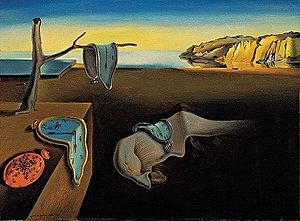
After Effects was a suggested option in which I could attempt to distort the clocks used in the opening scene of the film; I have used footage with acryclic paint and clock faces (out of focus) in the background of a variety of closeup shots.  The 'Liquify' tool enabled me to distort the clock faces; sub-categorized tools include 'Warp', 'Bloat' and 'Twirl'.  These effects suggest the irrelevance of time prior to the dream sequence - my film contains two different locations, therefore a stress in the contrasting environments.  Further work on After Effects would enable me to animate a sequence in terms of it's shape transformation using the timing tools to adapt the shapes, on a time scale.
 
'The Persistence of Memory' painting by Salvador Dali
'Liquify' effects on the clocks 

Sunday, 25 November 2012

Filming - 'The Persistence of Memory'

PREPARATION - VINYL MELTING AND MANY CLOCKS

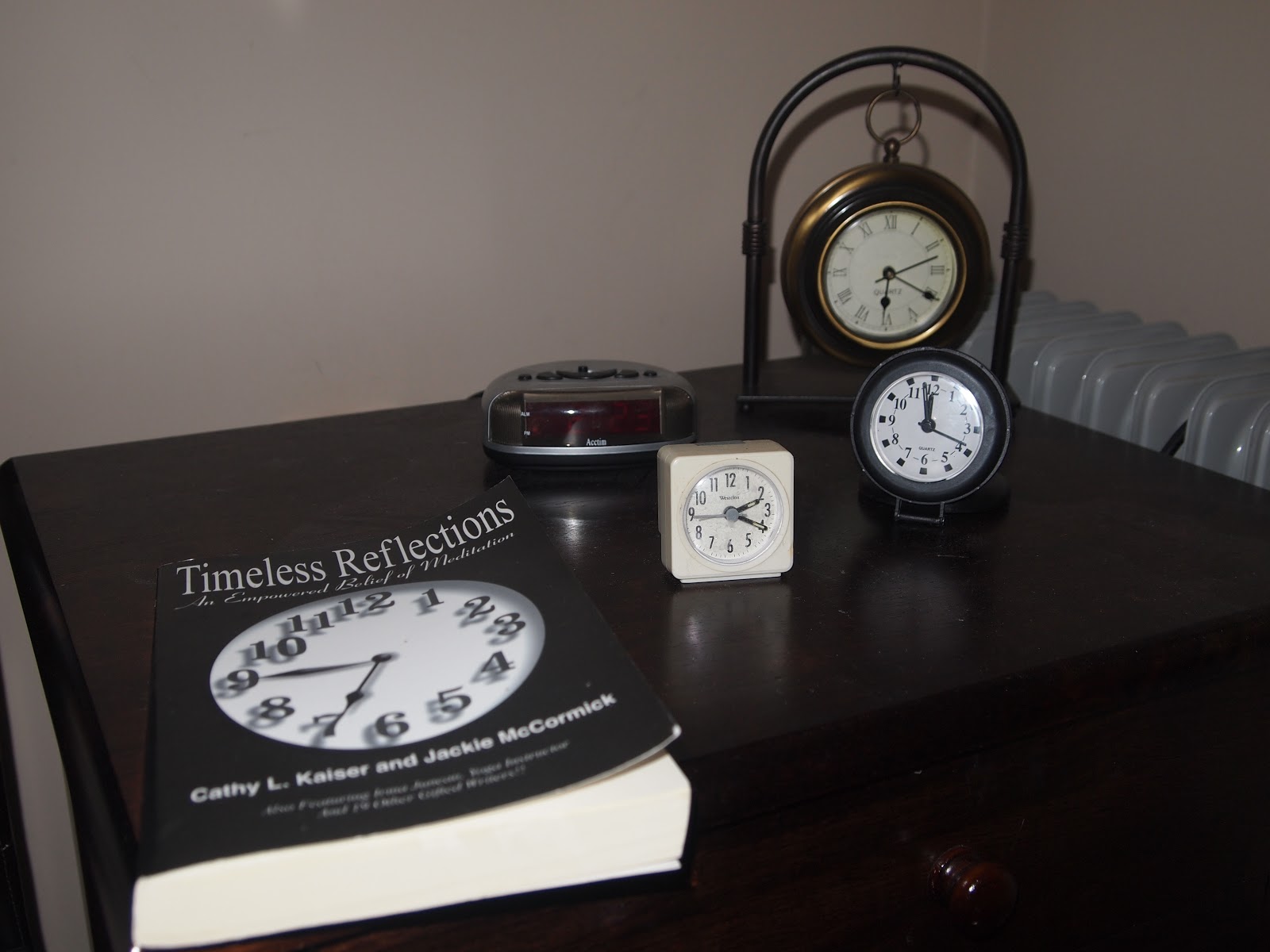
Take my advice, NEVER PLACE VINYL IN THE OVEN. THE FUMES ARE HORRENDOUS. After my plan to replicate melting clock shapes, it was unfortunately unsuccessful. The vinyl was left for too long and before I was aware it was very melted. Luckily, that was a last resort and my many gathered clocks collected from friends would be used in the opening scene. I have purchased cheap alarm clocks and the use of acrylic paint can be used to suggest the melting. Perfect.


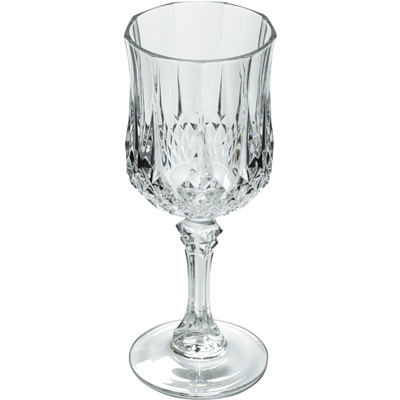
The dream state scene is in the dining room, where my character will be transported. My props have been organized; using crystal glasses and bowl and candle holders. I have placed. A large clock which will not be functioning to emphasize the irrelevance of time.


The clock is not functioning in this scene, the bowl is filled with soil and the crystal glasses are empty.  The connotations of the soil in Unknown Female's palm are almost similar to Un Chien Andalou with the ants.  I will portray my ants/ insects through scuttling sound effects and some manipulation of the shots.

Monday, 19 November 2012

Location Research

1st LOCATION - BEDROOM

The first scene is in the bedroom, where the male lies and is seen asleep.  The character is mature therefore using my mother's bedroom where a large, dark leather king size bed which the male will be sleeping upon.  The cream coloured walls will also reflect the maturity, and neutral drapery across the window is a suitable setting for an adult.  Wooden bedside tables are useful as many clocks will be placed on the side, which moments later will become disfigured.  My mother's bedroom immediately is a very suitable location and will effect the mise-en-scene greatly; in contrast to other locations such as my brother's bedroom.  The setting would not be suitable for the character, the blueish wall colour would perhaps seem suitable for a male, yet it is a light shade and could be more childish.  A large, purple coloured bunk-bed will also not be suitable for the scene and may suggest a child to the audience instead of a young adult, male lead.


2nd LOCATION - DINING ROOM

The second location is the dining room where the character awakens as he is transported to his dream state.  The table holds a variety of props with symbolic meaning very suitable to the mise-en-scene, the table is wooden which implies again an adult-like, mature use of prop.  The dark brown leather chairs are also very suitable and can suggest a neutral, adult like colour. The prop use effects my mise-en-scene as they each suggest symbolic denotations which are crucial to my surrealist feature.  The candles for example portray the memory, that was once there.  The soil in the bowl for example represents life.

There is not a large difference or variety of locations; I have chosen the symbolism and surrealist aspects to be a main part which enable the characters to progress and develop with their strange encounter.  I chose to film in my house as I was confident that the design was most suitable, perhaps other houses may not have a neutral feel suitable for both genders and my characters, which would have affected the overall mise-en-scene.  The lighting in the bedroom was minimal when shooting to suggest night time and sleep - a small lamp shade was useful in creating the desired effect in the bedroom.

Prop and Costume Planning

BENDY RECORDS?
 
Creating melted clocks like in Dali's painting will be an artistic challenge; but an idea suggested by a friend was the use of vinyls which become very versatile once heated.  The central mark with the paper can have arrows attached to it in order to replicate a clock form.
 
  PLASTER CLOCKS
 
Plaster can be used to manipulate and again create a clock like figure, slightly distorted around the edges; I will have to also create it's duplicate for the before and after state.  I will paint a variety of shapes and sizes.
 
REAL CLOCKS
 
My initial idea which I think is my most preferable suggests the use of real clocks gathered from a variety of places such as shops, borrowed, charity shops etc.  These will come in the form of many shapes and sizes such as wall clocks, alarm clocks, and grandfather clocks.  This variety enhances the characters obsession with the element of time. 
 
CRYSTAL WINE GLASSES
 
Crystal wine glasses will be used in the following scene commencing in the dream state; the dining room table is another symbolic aspect of my feature where the actors are seen 'drinking' from questionable empty glasses.
 
CRYSTAL BOWLS
 
This will be the centrepiece of the dining table, filled with various again questionable elements.
 
CANDLES/ GOTHIC CANDLE HOLDERS
 
 Gothic candle holders placed in the centre will enhance an old fashioned aspect, they are usually used as a centrepiece, instead of being alight they will be dull and slightly dark where they have been blown out, smoke will arise.

 CUTLERY/ PLATES

Each character will have an empty china plate and cutlery placed in front of them.

A memory is shown through various elements and props which will decorate the dining room; such as through aspects of his childhood. 

COSTUME

Unknown Male is seen first in bed, asleep.  He wears pyjamas, striped is most preferred.  A large watch is seen on his wrist.  The scene following is in the dining room; where he is transported from his peaceful sleep into the dream state - he is still wearing his pyjamas.  Unknown Female is an element of sophistication; dressed in a large knee-length skirt and brogue like shoes, with a heel.  A blouse can be seen beneath her cardigan, further accessories suggest her seductive, glamorous role.

MAKEUP

Unknown Female is subtle in terms of eyemakeup, black liner highlights the top eyelid.  Rouge lipstick is elegant as it accentuates the lips. 

Thursday, 15 November 2012

Production of Short Films

Exploring short films and the production process, different stages must be considered such as the use of sound or camera angles - and the portrayal of narrative styles, also the editing process.  These aspects guarantee the overall media product in how it depicts the genre of a film, and a plot/ convention.

SOUND

Film isn't just a visual experience; the use of sound creates an atmosphere which cannot be underestimated - sound consists of three main aspects. These are the human voice, sound effects and music - mixed and balanced, these three tracks include dialogue, synchronous and asynchronous sound, and music.  The use of dialogue as referred to by 'human voice' authenticates the speaker; telling the story and expressing feelings of the characters, this way little difference between character and actor is shown.  Contrastingly, little use of dialogue can also be effective - such as by fully using sound effects/ music to create tension etc.  The contrast of silence and sound is effective in genres such as Thriller/ horror films.  

The Lake by Garry Lane (1994) is a short film that uses narration, and minimal dialogue - sound are used to exaggerate the situation of the characters via screams, splashes etc.


SOUND EFFECTS

There are two types of sound effects used in film; synchronous sound refers to those sounds that match what is being shown; such as a character playing piano in a shot - we would hear the sound of the piano.  Synchronous sounds are effective in creating a realistic atmosphere, and can engage an audience such as in a moment of suspense - such as if they were to be heard creaking the door open.  Asynchronous sound effects do not match the image being viewed, and can therefore create a sense of emotional nuance - for example, the background sirens add to the suspense as we see our beloved hero fall to the floor in a scene.  This type of sound acknowledges surrounding scenery and atmosphere, again heightening realist aspects.  

This video shows effective use of foley sound used to create synchronous and asynchronous sound.

Music can also be used in films to add emotion or rhythm, it provides an emotional attitude and doesn't necessarily have to be notices in order to create effect.  Distant use of music implies a change in mood; such as dissonant music foreshadowing an upcoming tragedy. Background music can also help the viewer to link scenes. For example, a particular musical theme associated with an individual character/ situation may be repeated at various points in a film in order to remind the audience of salient motifs or ideas.

Use of Medium Shot in 'Get off my land', dialogue scene
CAMERA ANGLES/ SHOTS

Camera angles and movements define the sequence and creation of images in film; in order to gain interest in a shorter length feature, a variety of shots is vital.  Camera angles and shots refer to the framing/ length of shot, angle and movement tracking - the transition between different shots is referred to as a cut.  

SHOT LENGTHS
  • Extreme long shot (taken from a 1/4 of a mile away, scene setting, establishing shot, e.g. 'Get off my Land')
  • Long shot (image is almost 'life size' from a distance)
  • Medium shot (figure shot from knees/ waist upwards - normally used for dialogue scenes)
  • Close-up (shows very little background, specific detail of mise-en-scene, magnifies object/ importance)
  • Extreme close-up (magnifies beyond the human eyes ability, an artificial shot for dramatic effect)
ANGLES
  • The Birds Eye View (directly shot from overhead, object is smaller with less significance)
  • High angle (elevated above action, shows superiority)
  • Eye level (neutral shot, human level)
  • Low Angle (increase height - speeded motion, add disorientation to the viewer)
  • Oblique/ Canted Angle (titled, suggests imbalance, instability e.g. in horror movies)
MOVEMENT
  • Pans (scans scene horizontally)
  • Tilts (scans scene vertically)
  • Dolly shots (track scene)
  • Hand-held shots
  • Crane shots 
  • Zoom lenses (increase magnification)
  • Arial shot (powerful, even use helicopter)
EDITING

The post production means of film-making is the editing process; the use of technology allows the variations of editing through expansion of software's, programmes etc.  Well known editing forms and styles such as Classic Hollywood editing is enhanced through a large use of match cuts, of takes less than 7 seconds.  Montage editing is rarely used within Hollywood creations and is more likely to be seen in independent shorts.  This style of editing refers to many images juxtaposed together rapidly; and doesn't necessarily make sense.   
DROOM - A Surrealist short on the BBC film network is an example of a montage style product.


TWO AND TWO - This film is a symbol of dictatorship and tyranny and it's absurdness; is clearly edited in term of time-scale and continuity editing.  

Narration

Excuse my weirdness. A video about Narration types, and it's use in short films.